Paper Trails, Public Tables: How One FOI Request Can Start a Neighbourhood Conversation

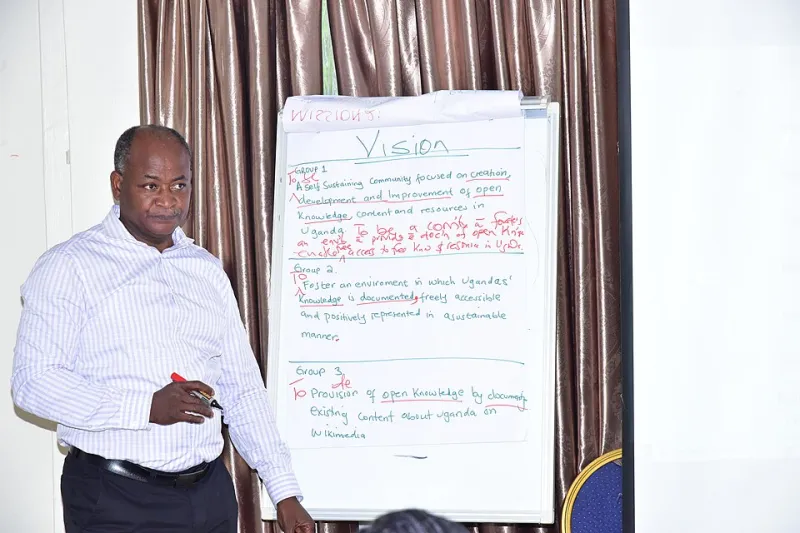
Photo: Rumuri Rutazima, CC BY 4.0, via Wikimedia Commons
A response to a Freedom of Information request can land in your inbox like a small, slightly dusty parcel. For a lot of campaigns, that is where it stays: opened, skimmed, maybe screenshotted for a thread, then forgotten. That is a waste. The FOI is not the campaign. It is the excuse to get people around a table.
Here at United Communities, we are interested in the kind of organising that turns public records into public conversation. Not because paperwork is exciting in itself, but because a shared document can do something a speech cannot: it gives a room full of neighbours the same set of facts and asks them what they want to do about it.
Pick a decision, not a feeling
The worst FOI requests are fishing trips. They ask for everything, from everyone, about everything, and they come back as a 400-page PDF with half the useful bits redacted. The best ones start with a single decision. A library consultation that felt too short. A former pub that was sold to a developer. A temporary accommodation contract that keeps getting extended. A piece of land that everyone thought was public and apparently is not.
Choose one decision with a date, a public body, and a pot of money attached. Write it down in a sentence. If you cannot say what decision you are asking about, you are not ready to file.
Write the request like a meeting invitation
A good FOI is not a demand for answers. It is a request for documents. Keep it tight and specific: name the decision, give a date range, ask for the contract, the variations, the officer report, the appendices, the delegated decision record, the equality impact assessment, the consultation summary, and the correspondence with the named organisation. Ask for electronic copies. Avoid asking for 'all emails' unless you enjoy disappointment.
Use whatdotheyknow.com if you can, so the request and response stay public and searchable. Public authorities normally have 20 working days to respond. If they refuse, do not take it personally. Read the exemption, refine the ask, and if needed ask for an internal review. The point is not to win an argument with a FOI officer. The point is to get a document a neighbour can hold.
Read for the gap, not the gotcha
When the response arrives, resist the urge to hunt for a single smoking gun. Read for the gap. Contracts tell you the term, the break clauses, the variations, the performance measures, the penalties, the subcontractors, and whether anyone promised social value and then quietly dropped it. Land records tell you who owns what, who leases it, what covenants sit on it, and whether there is an option agreement waiting in the wings. Meeting papers tell you what officers recommended, what councillors were told, and what was left out of the public report.
The most useful detail is often an absence. No equality impact assessment. No record of the consultation being advertised. No performance review since the contract began. No mention of the community group that asked to be involved. That absence is not proof of conspiracy. It is often just neglect. But neglect is exactly the kind of thing a organised neighbourhood can push on.
The redactions are a map
Do not treat every black box as a cover-up. Some redactions are legitimate: personal data, genuine commercial confidentiality, legal advice. But the pattern of redactions tells you what an authority thinks is sensitive. Note it. Ask why. If a whole contract is withheld but a press release quotes it warmly, that is worth a follow-up. If the only thing redacted is the name of a subcontractor, that is probably not the hill to die on. Save your energy for the clauses that change what a community can do.
Put the kettle on
This is the step most FOI guides skip. Once you have the documents, do not write the campaign plan alone in your kitchen. Book a room, print the key pages, bring highlighters and a big sheet of paper, and host a records night. Ninety minutes is plenty. Three questions: What did we learn? What surprised us? What does this mean for our ask?
Give people roles. One person reads the contract, one reads the meeting papers, one writes down every question that starts with 'why'. Someone should play the sceptic and ask what we still do not know. Someone should be the connector, noting who in the room has a neighbour, a councillor, a tenant group, or a local reporter who needs to see this.
The goal is not a lecture from the person who filed the request. It is a room full of people deciding what the evidence means. That is how a document becomes a shared asset rather than a private hobby.
From evidence to ask
End the meeting with one ask, one owner, and one date. It might be a question to the council's scrutiny committee. It might be a request for a meeting with the cabinet member. It might be a plain-English summary posted through letterboxes on the estate most affected. It might be a follow-up FOI asking for the missing appendix. All of those are fine, as long as the room knows who is doing what next.
Publish a short summary. Not a wonk's annotated bibliography, but a one-page 'what we found and what we are asking for' that anyone can read on a phone. Keep a log of requests, responses, and follow-ups. Over time, that log becomes a neighbourhood memory. It stops the same questions being asked from scratch every time a new officer or councillor arrives.
Keep the thread
A FOI request is a small piece of civic infrastructure. It can be filed by one person, but it works best when it is read by many. The next time you are tempted to fire off a broad request about everything the council has ever done, stop. Pick one decision. Ask for the paper trail. Then invite the street in.
The document is not the point. The conversation it starts is.