The Vacant Counter: Organising When the Bank Says It's Leaving
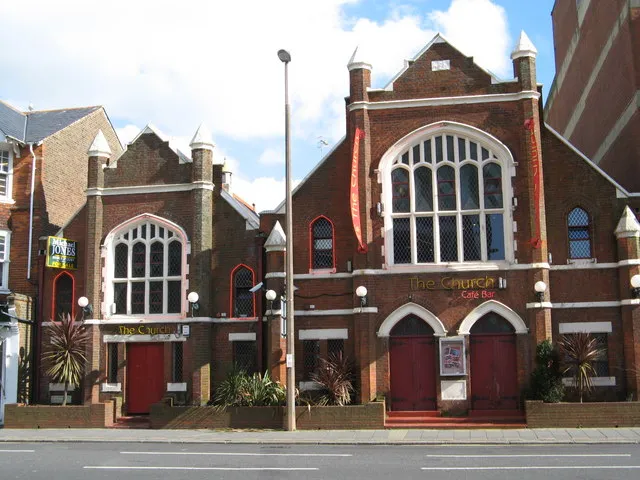
Photo: Josie Campbell , CC BY-SA 2.0, via Wikimedia Commons
The notice appears in the window with the quiet confidence of something already decided. Your bank is closing on a date a few months away. There's a leaflet about the Post Office, a phone number for the vulnerable, and a promise that everything will be fine. Most people walk past it. Organisers should not.
A bank branch closure is not just a private company rearranging its furniture. It is a civic event. It changes how people budget, how small businesses trade, how carers pay for support, how older residents get their pensions, and how anyone without a smartphone or a spare hour on hold accesses their own money. The notice is also a paper trail. It is the first moment you can ask: who actually relies on this counter, and what evidence will prove it?
Read the notice like a meeting agenda
The closure notice is not a press release. It is a document with a date, a stated reason, and an alternative. Treat it as the opening item on a meeting agenda you are about to convene.
Start by checking what the bank says it has considered. Under the financial regulators' rules, banks must assess the local impact of a closure—particularly on access to cash. That assessment should look at travel distances, alternative services, and the needs of people who depend on cash. Ask for it. If it isn't published, request it. If it is thin, note the gaps.
The notice will usually point you to the nearest Post Office or a cash machine a bus ride away. That is not the same as a bank branch. Post Office banking is vital, but it is not a full service, and a cash machine cannot help you sort out a bereavement, a fraud query, or a small business loan. The question is not whether an alternative exists on paper. It is whether it works for the people who actually live here.
Build your own evidence, because transaction data misses people
Banks make decisions using transaction data. That data tells them how many people used the counter last month. It does not tell them how many people stopped using the branch because the queue got too long, or because they can no longer get there, or because they never had a smartphone in the first place.
So gather your own evidence. This is not a research project. It is a set of conversations that double as organising.
Spend a week counting footfall outside the branch at different times of day. Not just the queue inside—the people who walk past and look at the notice, the ones who ask a friend to go in for them. Stand outside the Post Office on pension day. Ask the food bank coordinator how many people arrive with cash they have withdrawn that morning. Talk to the local taxi firm about fares to the nearest branch in the next town. Speak to the market traders who bank their takings in person because card fees eat their margin.
Then run a short, simple survey. One side of A4. Five questions. Do you use the branch? How do you get there? What would you do if it closed? Hand it out at the lunch club, the mosque, the church, the credit union, the children's centre, the disability support group. Leave copies at the pharmacy and the post office. Ask people to post them back or drop them in a box at the library. You will get stories that no transaction dataset can capture.
That evidence does two things. It gives you a baseline to challenge the bank's assessment. And it gives you a list of people who care enough to turn up to a meeting.
Challenge the access-to-cash assessment before the shutters come down
Once you have your evidence, use it. The bank's assessment is not a secret document to be filed away. It is a decision-making tool, and decisions can be challenged.
Write to the bank with your findings. Keep it factual, not furious. Ask specific questions: How many customers who use the counter live within a mile? What is the public transport journey time to the nearest alternative? How will the bank support customers who are not online? What conversations has it had with the local authority?
Copy in your MP, your ward councillors, and the local authority's economic development team. Ask the council whether it has made a formal representation. Ask LINK, the cash machine network, for its local data. Ask the bank for a public meeting—not a drop-in session with a single member of staff and a stack of leaflets, but a proper meeting where residents can ask questions and get answers on the record.
If the closure is already scheduled, you may not stop it. But you can shape what comes next.
Campaign for a banking hub, not just a sign on the door
A banking hub is a shared branch where several banks operate from one counter. They are not a perfect solution, but they are a real one—and they are being rolled out across the UK. Campaigning for a hub is a practical ask that keeps the issue alive after the branch closes.
The case for a hub is strongest when it is built on evidence of need. Your footfall counts, survey responses, and conversations with small businesses are exactly what Cash Access UK and the banks say they want. Submit them. Ask the local authority to nominate a site. Get your MP to write a letter of support. Keep the pressure on.
And do not let the campaign stop at the counter. The closure of a bank is often a symptom of something larger: a high street that is being hollowed out, a local economy that is being treated as a cost centre, a community that is expected to absorb every cut without complaint. The campaign for a banking hub is also a campaign for a say in what happens to your town.
The counter closes. The campaign doesn't.
The shutters will come down on a Friday afternoon. There will be a sign thanking customers for their loyalty. And then there will be a gap.
What you do before that gap appears matters. Read the notice. Gather the evidence. Challenge the assessment. Build a coalition that includes pensioners, traders, carers, and anyone who has ever needed to speak to a human being about their money. The campaign may not keep the branch open. But it can build something that lasts longer than a lease: a neighbourhood that knows how to count its own needs, and how to ask for better.
That is not a private business decision. It is a public one. And you have every right to be in the room.