Tinsel Is Not a Strategy: Turning the Winter Lights Into a January Plan
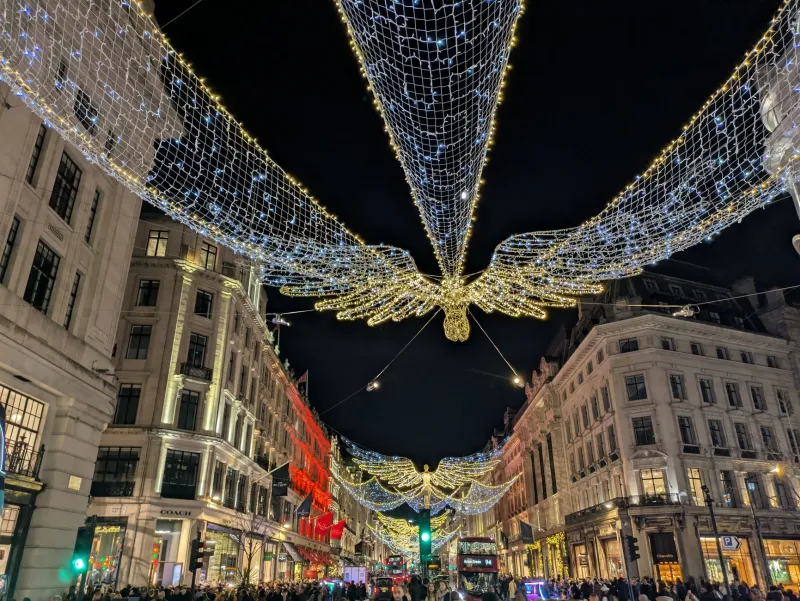
Every late November, the high street fills up. A councillor says a few words, a local radio host does the countdown, a children’s choir sings something slightly out of tune, and someone’s grandma gets a tear in her eye. Then the crowd drifts off to the market stalls and it’s over for another year.
For most people, that’s a nice evening. For an organiser, it’s a live map of who holds power in your town — and a room full of people who have just proved they care about the place. The question is what happens after the plug is pulled.
Start with the guest list, not the fairy lights
Stand at the back and watch the stage. Who is up there? Who gets the microphone? Who gets thanked from the podium? Usually it’s the council leader, someone from the business improvement district, a sponsor from a developer, maybe a local celebrity. Who isn’t up there? The tenants’ association. The food bank. The youth club. Disabled residents who use the square every day. The people who actually keep the high street alive in February.
Draw it on one sheet of A4: invited, speaking, performing, working, paying, absent. It’s an access audit with baubles. You’re not doing it to be grumpy. You’re doing it because the stage is a statement about whose voice counts — and that statement is worth challenging gently in January.
Follow the unpaid labour
Who marshals the crowd? Who makes the costumes? Who runs the raffle, hands out mince pies, stays late to stack chairs? Often it’s the same six women from the church, the same community group, the same volunteers who do everything else. Note it. Not to shame anyone, but to see where capacity sits — and where it could be shared.
If the same people are holding the switch-on together, your January campaign can’t assume they’ll hold that too. Ask them what they need. Sometimes the most radical act is offering to take a shift.
The budget is the story
Ask for the event budget. Council spend, sponsorship, BID levy, stall fees. Not to be awkward — because it tells you what the town actually values. How much for the lights, the stage, security, the road closure? How much for accessible toilets, BSL interpretation, free transport home? A town that can find £30,000 for a switch-on can find money for warm hubs in January. The line items are an agenda waiting to be written.
Don’t ask in a hostile way. Ask as a resident who wants to understand. 'Can you send me the breakdown? We’re looking at what’s possible for winter support and want to learn from how the lights are funded.' That’s a reasonable request, and it’s harder to refuse than it sounds.
Collect people, not just photos
Don’t just hand out leaflets that end up in a bin. Run a simple stall with one question: 'What would make this high street better in January?' A clipboard. A QR code to a mailing list that actually gets used. A paper sign-up for people who don’t do QR codes. Name, postcode, one thing they’d be up for helping with.
Then — and this is the bit most groups skip — tell them when you’ll be in touch. 'We’re meeting on 14 January at the library. Can we text you?' A promise with a date attached is worth ten newsletters.
Make the January ask before the mince pies
Goodwill evaporates by 2 January if there’s no next step. So name it at the event. Not in a pushy way — just clearly. There’s a follow-up meeting on a specific date in the church hall or library. There’s a crèche and refreshments. The ask might be: join the warm hub rota, support the library campaign, come to the budget scrutiny meeting, help audit the bus routes. Specific, time-bound, doable.
Book the room before December. Put the date on a flier and in the local WhatsApp groups. If you can, get three people to commit on the night to bringing one neighbour. That’s how a crowd becomes a campaign.
Who switches on the lights next year?
The longer game is about who controls the event. Is there a committee? Can residents join it? Could the switch-on have a community panel choosing the charity, the performers, the theme? That’s not about seizing the stage. It’s about widening who gets to stand on it.
A simple January ask: publish the event budget and invite two resident representatives onto the planning group. It’s modest, winnable, and it shifts something real. Next year, the guest list might look different.
A short checklist
- Map the stage, the budget, the labour and the guest list.
- One clipboard question, one mailing list, one date.
- Ask for the budget breakdown in writing.
- Book the January room before December.
- Follow up within 72 hours.
- Name one power ask: transparency, representation, or a line in the budget.
The lights go off. The relationships don’t have to. A switch-on is a rehearsal for the kind of town we want — one where the crowd isn’t just watching, but has a say in what gets plugged in next. Keep the plug. Keep the list. Keep the date.