Before the Diggers Arrive: How to Read a Planning Application Like an Organiser

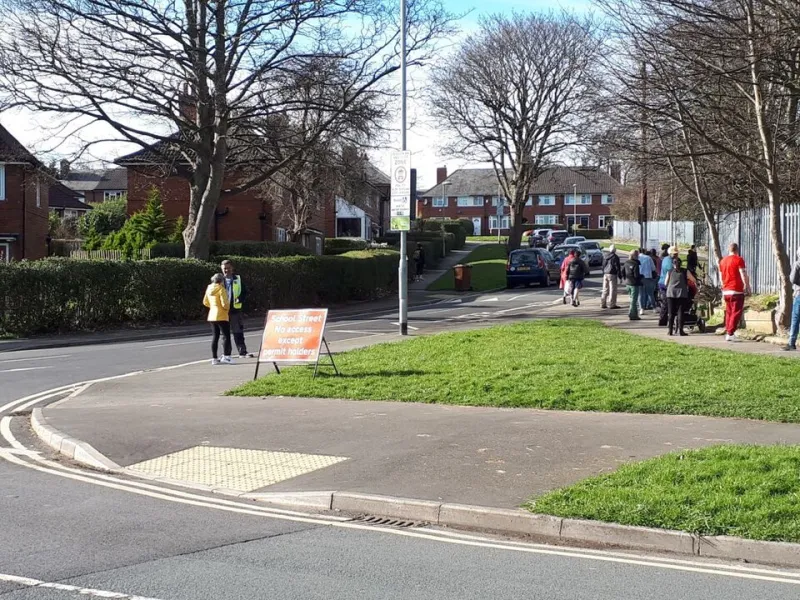
Photo: Tim Sheerman-Chase, CC BY 2.0, via Wikimedia Commons
Most people meet the planning system at the worst possible moment. A letter lands, a neighbour posts a photo of a yellow notice, and suddenly everyone is squinting at a council website trying to work out what is happening and when they can say something. By then the application has already been written, validated and loaded with assumptions about what your street is for. If you want a real say, you need to get curious earlier.
The planning portal is not a neutral filing cabinet. It is a political text. It shows what the applicant thinks matters, what the council has asked for, and which parts of the neighbourhood have been counted. Learning to read it is not bureaucracy. It is one of the most durable forms of local power we have.
Start with the notices, then work backwards
Every local authority publishes a weekly list of planning applications. Find your ward and scan it. Check site notices and neighbour notification letters too, because the portal is not always the first place an application appears. Open the reference and note the validation date and the consultation end date. In many councils the statutory window is 21 days, but local statements vary. Put the date in a shared calendar with a week's buffer, because the last day is not the day to start writing.
Read the file, not the summary
Application descriptions are short by design. The real argument is in the documents. Start with the application form to identify the applicant and agent, then read the planning statement and the design and access statement. The design and access statement is often where the politics hides. It will tell you what the scheme claims to be, how it claims to fit in, and what access it claims to provide. Test those claims against the drawings. Look at the red line boundary, the site layout, floor plans and elevations. Check the access section for step-free routes, blue badge parking, cycle storage, servicing and refuse. If access is only discussed in terms of cars, that is a question worth asking.
Other documents matter depending on the scheme: transport statements, heritage statements, flood risk assessments, drainage strategies, noise assessments, arboricultural surveys. You do not need to be an expert to spot an omission. You just need to ask what is missing and why.
Who has already spoken?
Open the comments tab and read everything. Not just objections. Support comments tell you who is organised and what they want. Look at statutory consultees too: highways, the Environment Agency, the conservation officer, the parish council. Ward councillors often comment. Note the themes and the gaps. If every comment comes from the same three streets, that is data. A standing watch can ask who is missing: renters, disabled residents, young people, shopkeepers, people who use the bus. Planning decisions shape all of them.
Turn one application into a standing watch
One application is a moment. A watch is a habit. Set up a shared spreadsheet with the reference, address, applicant, description, key dates, consultee responses, committee date, decision and conditions. Give two people a twenty-minute rota to check the weekly list every Friday. Ask the council whether it offers planning alerts by email. Build a polite relationship with the planning officer, not to lobby them but to understand the process. Follow the application through committee and beyond. Variations, non-material amendments and discharges of conditions can change what actually gets built.
Comment like you mean it
Planning comments carry more weight when they address material planning considerations. That means things like scale, design, amenity, daylight, privacy, noise, highways safety, drainage, heritage, ecology and affordable housing. It does not mean property values or competition. Be specific. Say what the impact is, who experiences it and what change would fix it. Ask for conditions if that is the practical route. Coordinate with neighbours, but do not copy and paste identical comments. Local knowledge is the thing you have that the applicant does not.
The long game
Planning literacy is not just about stopping bad schemes. It is about knowing where the next ones will come from. Read your local plan. Check whether your area has a neighbourhood plan, a conservation area or an Article 4 direction. These are the rules that shape what can be built before anyone submits a drawing. In 2026, with planning departments stretched and applications moving through under pressure, a neighbourhood that can read the file is harder to ignore. The portal is not the whole game. But it is where the game becomes visible. Learn to read it, and you stop being surprised.