The Term-Time Truce: Why Smart Coalitions Organise Around the School Run
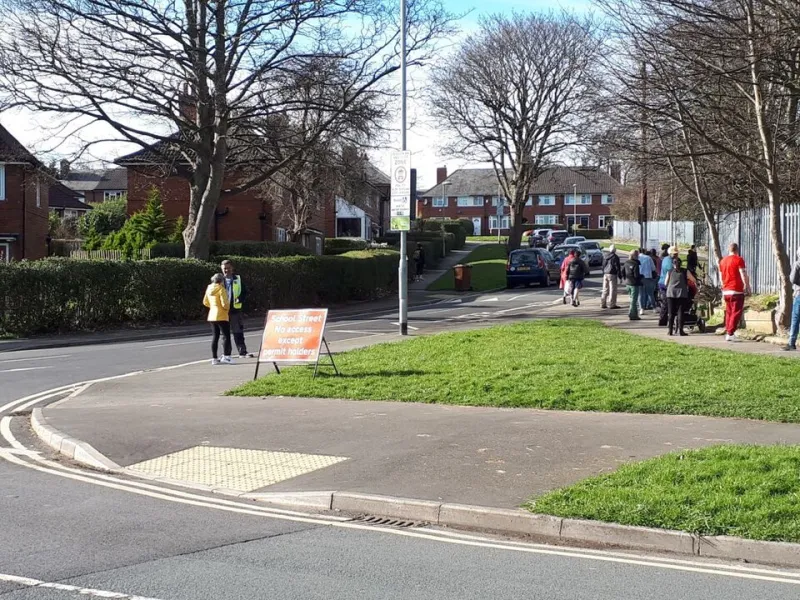
Photo: Stephen Craven , CC BY-SA 2.0, via Wikimedia Commons
Every campaign has two calendars. There is the official one: council meetings, consultation deadlines, the AGM, the big public launch. Then there is the real one, pinned to the fridge or buried in a phone: parents' evening, INSET days, the school fair, the half-term scramble, the week the grandparents are away. Too many coalitions plan for the first calendar and then act surprised when the second one turns up and empties the room.
That is the half-term gap. It is not a mysterious failure of commitment. It is what happens when a campaign built on evening meetings meets a week when the normal scaffolding of childcare falls away. If we want coalitions that are broad, resilient and actually representative, term dates need to sit next to the budget timetable on the wall.
The week the group chat goes quiet
October half-term has just gone. Perhaps your campaign noticed. The Tuesday meeting had half the usual faces. The leaflet drop was postponed. Someone apologised in the WhatsApp group and said they were on childcare duty, and everyone replied with sympathetic emojis before quietly moving on.
The story we often tell ourselves is that people drifted. The more accurate story is that the campaign asked them to choose between organising and caring, and they chose caring. That is not a recruiting problem. It is a design problem. A coalition that only works for people with free evenings and no caring responsibilities is not a broad coalition. It is a narrow one with good branding.
This matters beyond parents. Carers of disabled adults, people looking after grandchildren, shift workers whose rota changes with the school terms, and anyone whose paid work peaks in the holidays are all affected. School breaks are a useful proxy for a wider truth: care is not a private inconvenience that sits outside politics. It is one of the main reasons people cannot take part.
Put term dates in the campaign plan
A simple first step: get the dates. Local authority school term dates are usually published online, but academies and trusts often set their own, so ask around. Add college dates, nursery closures and any known INSET days. Mark the weeks when your core volunteers are likely to be stretched.
Then agree a rhythm. Many groups find that six- or seven-week blocks between breaks work better than an endless monthly meeting. The first week back after a holiday is often chaos; the last week before a break is often a write-off. That does not mean doing nothing. It means not scheduling the decisive vote, the big launch or the tricky negotiation in those weeks unless you have to.
Try a term-time truce: no major new asks in the first and last weeks of term, and a planned pause over half-terms and the longer breaks. In exchange, the campaign keeps moving through small, visible actions that do not require everyone in the same room at 7pm. As we head into the 2026 Christmas break, this is a good moment to test it.
Share the care, not just the load
Childcare is organising infrastructure. If a meeting has no plan for children, it has a plan to exclude some people. That does not always mean a crèche. It might mean a daytime weekend meeting, a quiet corner with paper and crayons, a buddy system at the door, or a shorter agenda that finishes when the bus does.
Where you can, budget for childcare. Put it in the funding bid as a real line, not a nice-to-have. Ask carers what actually works rather than assuming. A meeting with children in the room can be perfectly good if it is set up for it; it can also be miserable if everyone is pretending the children are not there while the same parent misses every other sentence.
Share the responsibility too. Do not let one person become the unofficial crèche. Rotas can help, but only if they are built with people rather than imposed on them. Ask who can cover transport, who can welcome latecomers, who can send the follow-up notes. The goal is not to make care invisible. It is to make it part of the plan.
Low-effort holiday tasks that keep the coalition visible
Holidays are not the time to launch a new campaign. They are a good time to do the small things that keep a coalition warm without burning out the people who are already stretched.
Think kitchen-table tasks: writing postcards to councillors, updating the noticeboard, scheduling social posts, phoning three people who have not been for a while. Think walks that double as listening: a pram-friendly audit of inaccessible pavements, a photo survey of empty shops, a ten-minute check of which noticeboards are actually being read. Think packing the coalition kit library, sorting leaflets, or drafting the one-page handover note for the next term.
Keep it optional and keep it light. The point is not to squeeze productivity out of a holiday. The point is to stop the campaign from disappearing from people's minds entirely. A single well-timed update can do more than three badly attended meetings.
A calendar you can defend
At the next coalition meeting, put the calendar on the agenda. Agree how decisions get made when people are absent. Write down what counts as quorum, who can sign off small spending, and where the handover notes live. Rotate the chair. Build in a landing meeting after each break — low agenda, warm welcome, no guilt about the gap.
Term-time planning is not softer organising. It is more rigorous. It forces us to ask who our campaign is actually built for, and whether the answer matches the community we say we represent. A fairer UK needs coalitions that can survive the school run, not just the council chamber. Put the term dates up next to the budget. The school gate is not an interruption to the campaign. It is part of the map.