The Unseen Shift: Why Your Campaign Lives or Dies by Its Spreadsheet
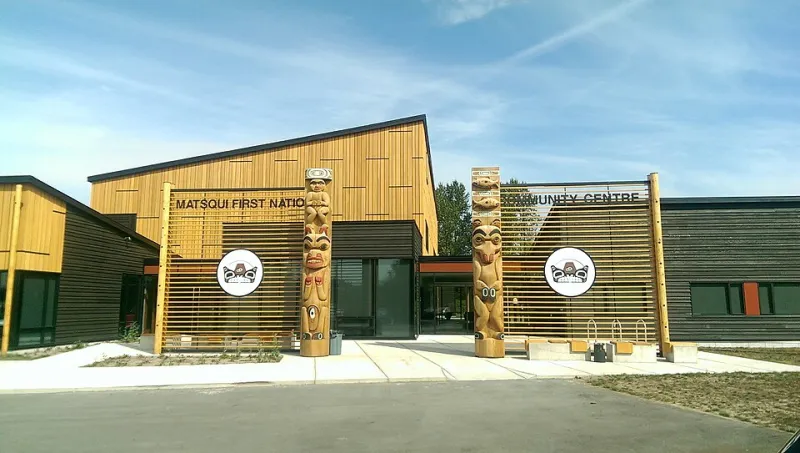
Photo: Stan Morgan of the Matsqui First Nation, CC BY-SA 3.0, via Wikimedia Commons
Here's an uncomfortable truth about community campaigns: the opposition is rarely what kills them. What kills them is the person who has been booking the room, taking the minutes, updating the spreadsheet and ringing round the people who said they'd come but didn't. Eventually that person gets a new job, or a diagnosis, or simply a Tuesday when they can't face another email. And the campaign deflates like a bouncy castle with a slow puncture.
We talk a lot in organising about power, strategy and narrative. We talk far less about the rota. That's a mistake, and it's a justice issue as much as a practical one.
The glamour gap
Every campaign has two kinds of work. There's the visible stuff: the speech, the banner drop, the radio interview, the photo outside the town hall. And there's the invisible stuff: the safeguarding checks, the minibus hire, the room booking, the minutes, the data entry, the thank-you notes, the expenses claim, the follow-up call to the person who came once and never came back.
The visible work gets celebrated. The invisible work gets assumed. And assumed work, in my experience, lands on the same shoulders again and again—often women, often older members, often disabled members, often people who already do admin in their day job and are somehow expected to do it for free at night too.
That's not a personality trait. It's a distribution problem. And it's one of the main reasons coalitions that look strong on paper quietly fall apart.
Who carries the load—and why it matters
Ask any campaign group who does the minutes and you'll usually get the same answer: a slightly embarrassed pause, then one name. Ask who has the keys to the shared inbox and it's often the same person. Ask who knows the password for the social media account and it's the same person again.
This is a power issue dressed up as a housekeeping one. The person with the inbox controls the information. The person with the minutes shapes the record. The person who knows how the funding works becomes indispensable, and then exhausted, and then gone.
If we're serious about building coalitions that outlast the people in the room, we have to share the unglamorous work deliberately. Not as an afterthought. As a design principle.
What a boring tasks rota actually looks like
You don't need software. A shared document with six columns will do.
| Task | How often | Time needed | Who's on it | Backup | Notes |
|---|---|---|---|---|---|
| Taking minutes | Each meeting | 45 mins | Rotating pairs | Named backup | Template saved in shared drive |
| Booking the room | Monthly | 20 mins | Rotating | Named backup | Check step-free access |
| Data entry | Weekly | 30 mins | Two people | Named backup | Shared spreadsheet, not a personal laptop |
| Follow-up calls | Fortnightly | 1 hour | Rotating | Named backup | Script and record sheet provided |
| Thank-you messages | Weekly | 15 mins | Rotating | Named backup | Includes new members |
| Expenses and receipts | Monthly | 30 mins | Rotating | Treasurer | Deadline published in advance |
The point isn't the table. The point is that every task has a name, a time estimate, and a backup—and that no name appears twice in a row.
Rules that make it fair
- No one owns a task forever. Rotate every three months, with a proper handover.
- Pair people up. New members shadow an experienced one for a cycle, then take the lead.
- Time-box everything. "Twenty minutes, not two hours" is a recruiting pitch in itself.
- Cover the costs. Travel, childcare, food, data, printing. Unpaid labour is still labour.
- Vary the meeting times. Wednesday 7pm suits some people and excludes others.
- Credit publicly. Name the minute-taker in the newsletter the way you'd name the speaker.
- Use a shared inbox, not someone's personal WhatsApp. It protects boundaries and stops knowledge hoarding.
- Review monthly. Ten minutes at the end of each meeting: what's working, what's slipping, who's overloaded.
Three groups that tried it
A renters' union in a northern city introduced a rota after its secretary burned out two months before a big council vote. They split minute-taking into pairs, put the shared inbox on a rota, and started paying bus fares for anyone who had to travel to meetings. Attendance went up, and crucially, so did the number of people willing to speak at the vote.
A parent-led school streets campaign found that its "core group" of four was doing everything. They introduced a fifteen-minute task list at the end of every meeting and asked people to pick one thing before they left. It felt almost too simple. It doubled the number of active members in a term.
A rural climate group in the South West started a "boring buddy" system, pairing a new member with an existing one for the less visible jobs. The new members said later that it was the first time they'd felt genuinely useful rather than just present.
Ten jobs nobody volunteers for—and why you should ask anyway
- Taking minutes.
- Chasing the room booking.
- Updating the contact spreadsheet.
- Making the follow-up calls.
- Writing the thank-you messages.
- Filing the expenses.
- Coordinating lifts and accessible transport.
- Keeping the shared inbox tidy.
- Checking safeguarding paperwork.
- Writing the agenda nobody reads but everyone needs.
Each of these is a small act of care. Each one keeps the coalition alive.
Start with three
Don't try to rota everything at once. Pick three tasks this month, put them in a shared document, and ask for two volunteers and one backup for each. Then review it at the next meeting, honestly, and adjust.
The headline might go to the person with the megaphone. But the campaign belongs to whoever keeps the spreadsheet. Let's start treating that work with the respect—and the fairness—it deserves.