Who Decides Where the Money Goes? The Quiet Rise of Resident-Led Budgets
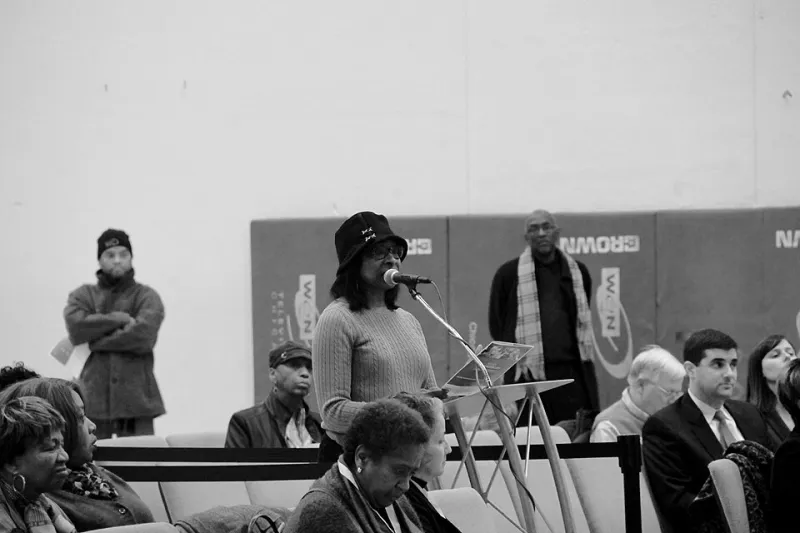
Photo: Daniel X. O'Neil from USA, CC BY 2.0, via Wikimedia Commons
A million pounds sounds abstract until it's sitting in a church hall on a Tuesday night and the people deciding what happens to it live three streets away. That's the simple, slightly unnerving promise of participatory budgeting (PB): residents don't just get consulted on the council's spending plans, they shape them, pitch them, and vote on them.
It has been around long enough to have a history—rooted in Porto Alegre, Brazil, in the late 1980s, piloted in parts of the UK in the 2000s, and given a push in Scotland through the Community Choices programme, which set councils the challenge of handing over a share of their budgets. What's changed in 2026 is the scale. Where PB once meant a few thousand pounds for hanging baskets, community groups are now wrestling with seven-figure pots, housing association budgets, and neighbourhood shares of developer contributions.
That shift raises the real question. Not "can residents handle the money?" but "why were they ever kept away from it?"
What participatory budgeting actually is—and what it isn't
PB is a process where local people set spending priorities, develop proposals, and vote on which ones get funded. The money is real, the decision is binding, and the council or funder commits in advance to live with the result.
It is not a consultation exercise with a feedback form at the end. It is not a dragons' den where officers reserve the right to overrule the vote. And it is not a one-off fun day with a bouncy castle and a clipboard.
Done properly, PB has a few non-negotiables:
- A fixed pot and a fixed timeline. Vague promises kill trust.
- Rules agreed in public before anyone pitches. Eligibility, geography, minimum and maximum grants, what's excluded.
- Residents involved in designing the process, not just turning up to vote at the end.
- A feedback loop. Winners get delivered, losers get told why, and everyone sees the receipts.
Get those right and PB becomes a civic muscle. Get them wrong and you've invented a very expensive opinion poll.
The fairness argument
Think about who turns up to a standard council consultation. Usually it's the people with the time, the confidence, and the broadband—often older, often homeowners, often already connected to the ward councillor. Nothing wrong with them, but they are not a representative sample of a street.
PB changes the guest list. When there's a real decision at the end, and when the process is built around school gates, tenants' halls, faith spaces and community centres, the room starts to look more like the neighbourhood. That matters most in places where trust in institutions has been worn thin by years of cuts, regeneration schemes that never quite delivered, and decisions announced rather than discussed.
There's a harder fairness point too. Austerity didn't just shrink budgets; it shrank the number of people who felt entitled to have a view on them. Handing over decision-making is a way of saying: this is yours, and we trust you with it. That's not a gimmick. It's a redistribution of power, which is usually the bit that gets quietly dropped.
How to get from idea to first vote
Most PB processes follow a similar arc. The detail varies, but the shape holds.
- Find the pot and the sponsor. It might be a ward budget, a housing association's community fund, a council's UK Shared Prosperity successor funding, a section 106 pot, or an NHS neighbourhood scheme. You need one person with authority to say yes.
- Agree the rules together. Residents' steering group plus officers, meeting at least three times, with notes published.
- Set the geography. A ward, an estate, a cluster of streets. Too big and it feels remote; too small and you exclude the people next door.
- Budget for the boring bits. Venues, childcare, translation, accessible transport, food, interpreters, a paid facilitator. Aim for around a tenth of the pot.
- Recruit beyond the usual suspects. Go to where people already are. Knock on doors. Work through existing groups rather than inventing new ones.
- Support proposal development. Run a couple of drop-in sessions so a good idea from a kitchen table can become a costed plan. This is where the playing field gets levelled.
- Vote in more than one way. Online, paper, in person, at different times of day. Count it publicly.
- Deliver, then report back. Nothing builds trust like a project that actually happens.
Lessons from places that have done it
A market town in Yorkshire ran its first round with £40,000 and learned the hard way that a small pot attracts small ideas—twenty banners and not much else. The second round came with capacity support: a part-time organiser helping residents turn instincts into budgets. The projects got bigger and better.
A coastal town in the South West paired its PB round with a residents' panel that met monthly, so the energy didn't evaporate after the vote. And a London estate used a seven-figure housing pot, split 70/20/10 between resident-voted projects, technical support, and administration. The split mattered: it stopped the process being captured by whoever shouted loudest and gave smaller groups a fighting chance.
The recurring lesson is that PB fails when it's treated as an event. It works when it's treated as infrastructure.
Your first assembly: a 2026 checklist
- Pick a date that doesn't clash with school holidays, Ramadan, Diwali or the local carnival.
- Book an accessible venue with step-free access, hearing loop, and good transport links.
- Arrange childcare, food, and travel expenses—and say so on the flyer.
- Translate materials into the top three languages spoken locally.
- Recruit two resident chairs, not one.
- Prepare a one-page rules sheet and read it aloud at the start.
- Have a clear answer to "what happens next?" and a date for it.
- Take names, postcodes and contact preferences—and ask before adding anyone to a mailing list.
- Write the minutes within 48 hours and publish them.
- End with a task for everyone in the room, however small.
The million-pound question
If you're holding a big pot, resist the urge to make it one big vote. Break it into rounds, themes, or neighbourhood allocations. Fund the unglamorous stuff—the organisers, the creche, the accessible minibus—because that's what makes the process fair. And publish everything: the bids, the votes, the spend, the delays.
Handing over cash isn't the radical part. Handing over the power to decide is. Everything else is just good admin in service of a better idea: that the people who live somewhere are the experts on it.