Who Gets the Last Word? Seven Questions to Test a 'Community-Led' Campaign
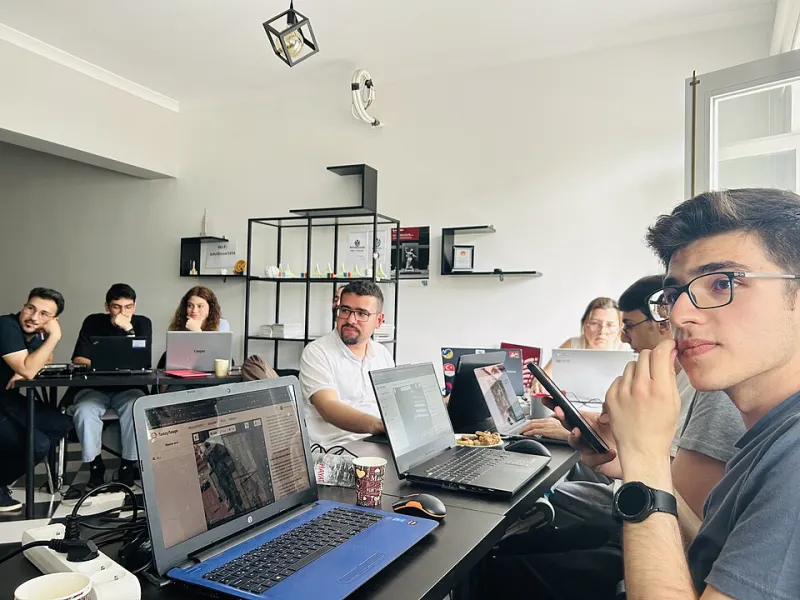
Photo: Adem, CC BY 4.0, via Wikimedia Commons
Every campaign in the country describes itself as community-led. It's on the funding bid, in the press release, on the slide with the nice photo of people holding a banner. The harder question is whether it's true — and there's a simple way to start finding out.
We call it the bus stop test: could somebody who relies on public transport, who has caring responsibilities, or who isn't online still shape your campaign and join it? Not in theory. On a wet Tuesday in November.
Try these seven questions honestly. Better still, don't answer them yourself — ask the people you say you represent, then sit with the answers.
1. Can someone get there on the bus, and get back again?
It's one thing to book the church hall with the nice kitchen. It's another to check whether the last bus leaves before the meeting ends. In England the capped single fare is still a real cost when you're paying twice, and in rural areas the timetable is the campaign. In Scotland, free bus travel for under-22s and over-60s helps enormously — but it doesn't solve a Sunday evening gap or a venue two unlit streets from the stop.
Ask: is the venue on a route that runs after the meeting finishes? Is the walk step-free, lit and safe? Do we reimburse fares, in cash, on the night, without a receipt hunt? If the honest answer is "most people drive", you've found your first problem.
2. Whose evening are we borrowing?
A 7pm start is a very specific invitation. It suits people with predictable hours, no caring duties, a car and someone else to do bedtime. Shift workers, carers, parents of young children, people on zero-hours contracts and anyone navigating a hospital appointment carousel are quietly excluded.
So rotate. Run a Saturday morning session each month. Try a 2pm weekday slot with childcare on site. Feed people properly — not crisps, actual food. Pay for childcare, don't just apologise for its absence. If the same eleven people always make it, that's not a membership, it's a clique with minutes.
3. Who's missing because everything happens in a group chat?
WhatsApp is fast and free, and it is also a filter. Anyone without a smartphone, without data, without confidence, or without English as a first language is behind a door you may not even see.
Build in a paper and phone route to the same information. Plain-English one-pagers through the library, the laundrette, the barber, the GP surgery, the mosque, the food bank, the school gate. A named human who will ring people back. A landline number that a real person answers. Local radio and the free newsletter that goes through doors.
Ask: could someone take part in this campaign entirely by phone and paper? If not, you have a participation ceiling you didn't choose.
4. Whose voice does the room reward?
The confident man with the clipboard is a national institution. He arrives early, speaks first, uses acronyms and knows the ward boundary names. Everyone else adapts to him.
Good facilitation is a power tool, not a soft skill. Rounds before open discussion. Small groups rather than one big circle. Jargon banned and translated out loud. Agendas circulated in advance, in accessible formats. Interpreters and BSL provision booked properly, not scrambled at the last minute. A quiet room. A women-only conversation if that's what it takes for people to speak.
Watch who gets interrupted. Watch whose idea gets repeated by someone else and suddenly becomes the plan. That's the whole game.
5. Who holds the pen and the purse?
This is where the phrase "community-led" usually falls over. Who writes the survey? Who decides the actual campaign ask? Who signs the funding bid? Who talks to the local paper, and who gets quoted?
A useful test: could a group of residents veto a decision, not just comment on it? Are there resident co-chairs with real authority, not decorative ones? Is there a small budget residents control, even £500, with their own sign-off? Can the campaign be stopped by the people it claims to serve?
If the answer to all of these is no, you have a consultation exercise with better branding.
6. What happens between the meetings?
Most people's experience of a campaign is not the meeting. It's the silence afterwards. Did anyone tell them what happened? Did the thing they raised come back, with a reason if the answer was no?
Build a feedback loop that doesn't depend on people showing up: a monthly plain-English update, a noticeboard in the venue, a phone tree for the people who aren't online, and minutes that read like sentences rather than committee furniture. Report back on losses as well as wins. Credibility is built by telling people the truth about a meeting with the council that went badly.
7. What would make someone walk away — and do we notice when they do?
People leave campaigns because a request was refused without explanation, because someone behaved badly and nothing happened, because they were the only person of their background in the room, or because they ran out of energy and nobody checked in.
Have a code of conduct. Have a complaints route a volunteer can actually use. Have a safeguarding lead. Do exit conversations — not as a survey, as a brew and a chat. Count the people who stopped coming, not just the ones who joined.
Do the test where the buses actually are
None of this works as a desk exercise. Take a clipboard, a thermos and a folding chair to the bus station on a Saturday morning and ask people what would make a meeting possible for them. Stand outside the school at pickup. Sit in the waiting room at the health centre.
You'll get a sharper strategy in two hours than in a whole away-day with a flipchart. And you'll find out something better than whether your campaign is community-led: you'll find out who'd like to help lead it, if only someone asked at a time they could manage.