Where the Real Meeting Happens: The Everyday Places That Hold a Campaign Together
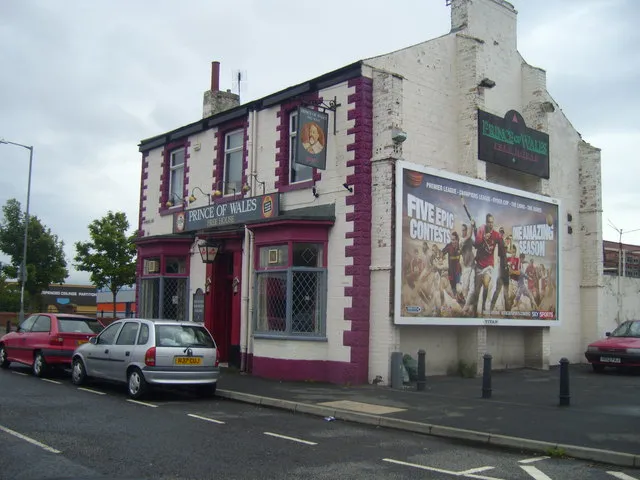
Photo: Ian Barton, CC BY-SA 2.0, via Wikimedia Commons
You can learn more about a campaign from where it meets than from its constitution.
If the answer is 'a hired room above the library, second Tuesday of the month, 7pm sharp', you've probably got a group that is well organised but not yet rooted. If the answer is 'whoever's in the back room on a Thursday', you've got something with a pulse.
Third places — the pub, the café, the laundrette, the barber's, the library, the bowls club, the leisure centre foyer — are the unwritten infrastructure of community organising in the UK. They are not campaign offices, and that is precisely why they work. People arrive without an agenda. They stay for reasons that have nothing to do with your campaign. Which is why, when the campaign needs them, they are already there.
The infrastructure that never makes it onto a spreadsheet
Most campaign plans have a column for 'venues'. Very few have a column for 'relationships that already exist in a room we don't control'.
That's the gap. A hired hall costs money, needs a booking, and signals that something official is happening — which, for a lot of people, is a reason to stay away. A third place does the opposite. It's neutral ground. Nobody has to declare themselves. You can turn up, say nothing, listen to the moaning about the bins, and quietly work out that these are your people.
Organisers who've been doing this a while tend to say the same thing: the real conversations happen afterwards — at the bar, over a bag of chips, or while waiting for the tumble dryer to finish. That's not a nice-to-have. For plenty of residents, especially older people, people on low incomes, and anyone who has been burned by a consultation before, it is the only place trust actually gets built.
What it looks like when it's working
The examples are everywhere once you start looking.
There's the community pub movement, where villages and estates have bought their local and turned it into a hub. The Plunkett Foundation has been backing these for years, and the pattern repeats: the pub survives, and so does everything that used to happen inside it. The pensioners' coffee morning. The food bank drop-off. The corner where a bus campaign got its first ten signatures.
Then there are the library campaigns that stopped fighting only for a building and started fighting for a service — running rhymetimes, homework clubs and warm spaces out of whatever premises they could hold on to. Several discovered the fight was winnable precisely because the library had already become where the neighbourhood does its admin: printing, form-filling, and increasingly helping each other through the benefits system.
And there's the laundrette. Unfashionable, unglamorous, and one of the last genuinely mixed spaces left on many high streets. Organisers in a few cities have quietly built relationships there — a noticeboard above the machines, a stack of leaflets that isn't really a stack of leaflets so much as an open invitation, a Saturday morning where someone is just... around. Nobody is being recruited. People talk because they are sitting next to each other for forty minutes with nothing else to do.
The honest risks
None of this is stable, and it's a mistake to romanticise it.
Pubs close. Libraries close. Laundrettes become flats. The spaces that carry the most social weight are frequently the ones with the thinnest margins, and the ones most exposed when a landlord decides to cash in. When a third place goes, it doesn't just remove a building — it scatters a network that took years to form.
The second risk is co-option. A campaign that gets too comfortable in one pub starts to look like that pub's campaign. If the only room you're known in has a quiz night and three cask ales, you will build a coalition that looks like the quiz night. That's not a dig at quiz nights. It's a reminder that the room shapes the room.
The third risk is extraction. Organisers are very good at spotting a warm, welcoming space and immediately wanting to fill it with clipboards. Do that often enough and the welcome wears out. Most people are in the pub to not be lobbied.
Using a third place without wrecking it
A few ground rules, gathered from organisers who have done this well:
Ask before you assume. The landlord, the manager, the volunteer on the rota — they're not a venue, they're a relationship. Ask what's useful and what's irritating. Ask what they'd never allow. Then remember the answer.
Turn up when you don't want anything. The most common mistake is only appearing when there's a petition to sign. Spend six months being a regular first. Buy the tea. Learn names. Be boring.
Leave the room as you found it. No banners on the walls without permission. No rearranging the furniture. No making regulars feel like extras in somebody else's campaign.
Spread out. If one space is doing all the work, you've built a single point of failure. Aim for three or four anchors across a neighbourhood, and make sure they don't all look the same.
Give something back. Fundraise for the space. Turn up to its own fight when the rent goes up. Fix the noticeboard. The relationship is reciprocal or it isn't real.
Protect it politically. If your campaign wins and the pub closes six months later, what exactly did you win? Community ownership, Asset of Community Value listings and planning protections are unglamorous. They're also how you keep the infrastructure standing.
The long game
Third places run on a different timescale to campaigns. A campaign has a launch, a peak and a decision. A pub has a Tuesday.
That's why they matter. Building power in the UK right now — in places where the council doesn't answer your emails and the local paper is down to two staff — is less about the perfect mobilisation and more about being a known quantity in a room where people already trust each other. The people who will knock doors with you in eighteen months are, at this moment, just having a pint. Or waiting for their washing.
Go and see them. Not to ask for anything. Just to be there.