The Two-Bus Problem: Auditing Travel Before You Book the Room
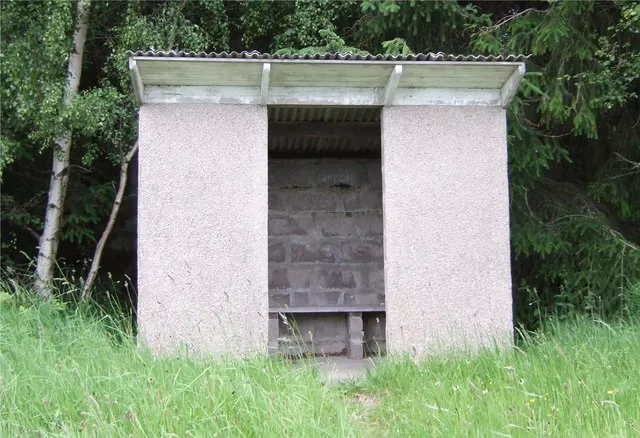
Photo: Stanley Howe, CC BY-SA 2.0, via Wikimedia Commons
It's a Tuesday in February. The hall is warm, the biscuits are out, and the same fourteen people are sitting in the same circle. Not because nobody else cares about the closure of the leisure centre — but because the last bus from the estate left at 6.40pm, and the meeting started at seven.
We talk a lot in this movement about who is in the room. We talk less about how they got there, and what it cost them. That's the blind spot this piece is about.
The journey is part of the meeting
There's a member of our coalition — let's call her Denise — who lives four miles from the community centre where we meet. Door to door, her journey takes seventy-five minutes and involves two buses, a twenty-minute wait on an unlit stretch of road, and £5.60 in fares if she travels after nine in the morning. On a bad day it's three buses.
She came to two meetings in 2024 and hasn't been since. For a long time we assumed she'd lost interest. She hadn't. She'd done the sums.
Transport poverty isn't a niche issue bolted onto community organising. It is the organising issue. A campaign that can only be joined by people with a car, a travel budget and a tolerance for night-time walking is a campaign with a built-in filter — and that filter usually removes the people with the most at stake.
Start with an honest travel audit
Before you change a single thing about your meetings, find out what getting to them actually involves. A rough method that works:
- Ring ten people who've drifted away. Ask what would have made coming possible. Ask about routes, fares, connections, the walk from the stop, and whether they'd feel safe coming home in the dark. Don't defend anything. Just write it down.
- Do the trip yourself. Get the bus from the far end of your patch to your venue at the time you'd normally travel. Note the connections, the wait, the lighting, the pavement, whether the stop has a shelter or a timetable that hasn't been vandalised.
- Check the last bus home. This single fact shapes attendance more than anything else on your agenda. If the answer is 9.15pm, your 7pm meeting is really a 90-minute meeting whether you like it or not.
- Look at the walk, not just the ride. Step-free access from the stop, dropped kerbs, crossings, street lighting, and whether the route passes anywhere people would rather not walk alone after dark.
- Ask about Sundays and evenings. A lot of rural and outer-estate services effectively vanish at 6pm and don't exist at all on Sundays. If your only meetings are weeknights, you've quietly excluded anyone on a Sunday-only bus.
One coalition we know printed a simple one-page map: their three venues, the bus stops nearby, the routes that serve them, and the time of the last service home. It took an afternoon to make and it changed how the group planned everything for the next two years.
Let the timetable pick the time, not the other way round
Most groups book a room and then hope people can reach it. Reverse that.
Read the timetable first, then choose. A 6pm start in a draughty church hall on a bus corridor will out-attend a 7.30pm start in a beautiful, well-heated building nobody can get to. Rotate venues across your patch so that the travel burden is shared rather than dumped on one end of the ward. Co-locate with things people already travel for — the school run, the food shop, a Saturday morning market, a faith gathering, a toddler group.
And be honest about hybrid. A Zoom link is not an accessibility strategy; it excludes anyone without data, a device or a quiet room. But paired with a phone-in option and a dial-in number, it stops being a fig leaf and starts being a genuine second door.
Budget for getting there — and say so loudly
If travel costs sit outside your project budget, they sit inside your members' household budgets. That's a political choice, not an administrative one.
Put these lines in your next funding bid and your next internal budget:
- Fares reimbursed in cash on the night, at the door, no receipts and no form-filling. Reimbursement-by-email is a barrier dressed as a process.
- A small float of pre-bought day tickets or topped-up travel cards for people who can't front the fare.
- A taxi budget, ring-fenced, for disabled members and for anyone who can't safely walk home after dark.
- Minibus or community car hire for bigger actions and AGMs.
- Childcare costs that include the journey to and from childcare.
Then say it in the invitation, in plain words: Travel costs covered. Just turn up. Ask at the door. If people don't know the money is there, the budget might as well not exist.
Partner with community transport instead of reinventing it
Every area has some version of this — dial-a-ride, community minibuses, volunteer car schemes, group travel for clubs and day trips. They are chronically underused by campaigners and they usually welcome the booking.
A few practical notes from groups who've done it:
- Book early. Volunteer driver schemes fill up, and the good ones fill up weeks ahead.
- Ask about capacity, not just willingness. How many seats, what times, and can they do a return trip after 9pm?
- Offer to cover costs properly. These services run on shoestrings and goodwill; paying the going rate keeps the relationship healthy.
- Consider buying a seat, not a bus. Pooling members onto one booked minibus is often cheaper per head than a dozen reimbursed taxi fares.
- Build the relationship before you need it. The week of your big public meeting is not the week to introduce yourself to the local community transport coordinator.
The uncomfortable bit
Look at your attendance sheet and ask what it maps. If it looks like a list of people with cars, it is. That's not a values problem, and it isn't solved by a nicer welcome speech. It's a logistics problem — and logistics, unlike culture, can actually be fixed with a timetable, a float of cash and a phone call.
The bus fare barrier is quiet. Nobody storms out over £5.60. They just stop coming, one by one, and the room gets smaller and more comfortable and less representative, and everyone wonders why the campaign has lost its edge.
Book the room around the route. Put the fares in the budget. Say it out loud in the invite. Then see who turns up.